Microbes are everywhere, and often making our lives easier without us even noticing. For example, yeast helps make bread soft and fluffy by consuming sugar and producing carbon dioxide gas, which causes the dough to expand.

In this experiment, we'll use yeast to inflate a balloon with carbon dioxide. It's a fun, educational, and kid-friendly way to teach the little ones about the power of microbes.
What You’ll Need

To get started, gather these simple materials:

🍾 A small plastic bottle
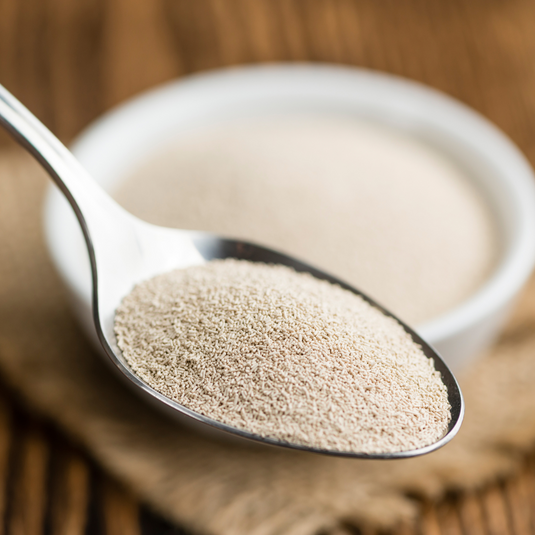
🥄 A teaspoon of active dry yeast
🍭 A teaspoon of sugar
💦 Warm water (40°C, 100 milliliters)
🎈 A balloon

Step-by-Step Guide

Step 1: Prepare the Yeast Solution

1. Fill the plastic bottle with the warm water.
2. Add a teaspoon of dry yeast to the water.

Step 2: Add Sugar

1. Add a teaspoon of sugar to the yeast solution. Sugar serves as food for the yeast, enabling it to produce carbon dioxide more quickly.
2. Stir the mixture gently to help dissolve the sugar.

Step 3: Attach the Balloon

1. Carefully stretch the balloon over the mouth of the bottle. Ensure the balloon is secure to prevent any gas from escaping.
2. Place the bottle in a warm place and wait.

Step 4: Watch the Magic Happen

1. As the yeast ferments the sugar, it will produce carbon dioxide gas, which will begin to fill the balloon.
2. Observe the balloon as it slowly inflates. This process might take a few minutes, so be patient and enjoy watching the power of microbes at work!

The Science

Yeast are tiny, single-celled fungi that play a crucial role in fermentation. When they consume sugar, they convert it into alcohol and carbon dioxide. This process is known as fermentation. In our experiment, the carbon dioxide gas gets trapped in the balloon, causing it to inflate. This simple reaction showcases how yeast works in baking, where the carbon dioxide helps dough rise, creating fluffy bread.

We hope you and your little scientists had fun with this microbe experiment. It's a fantastic way to introduce children to the invisible yet powerful world of microbes. Next time you see a loaf of bread rising in the oven, you’ll know that microbes are hard at work behind the scenes.

Happy experimenting! 🌿🔬

  • Toilet Foam Explosion: new formula, even more foam

    Toilet Foam Explosion: new formula, even more foam

    Good news for anyone who likes a clean toilet with minimal effort: our Toilet Foam Explosion has a brand new formula. More foam, even with cold water, and more power...

    Toilet Foam Explosion: new formula, even more foam

    Good news for anyone who likes a clean toilet with minimal effort: our Toilet Foam Explosion has a brand new formula. More foam, even with cold water, and more power...

  • SOS: your stain guide (and the bacteria behind it)

    SOS: your stain guide (and the bacteria behind it)

    Grassy knees, coffee stains on your white shirt, yellow armpit stains. Each one is a completely different chemistry problem, and here's exactly what's happening in the fabric, and why each...

    SOS: your stain guide (and the bacteria behind it)

    Grassy knees, coffee stains on your white shirt, yellow armpit stains. Each one is a completely different chemistry problem, and here's exactly what's happening in the fabric, and why each...

  • The Japanese practice of forest bathing

    The Japanese practice of forest bathing

    Every autumn, the windows close and probably stay closed until spring. That might seem healthy, but it's also why YOKUU exists, and the science behind it starts with a Japanese...

    The Japanese practice of forest bathing

    Every autumn, the windows close and probably stay closed until spring. That might seem healthy, but it's also why YOKUU exists, and the science behind it starts with a Japanese...

1 von 3